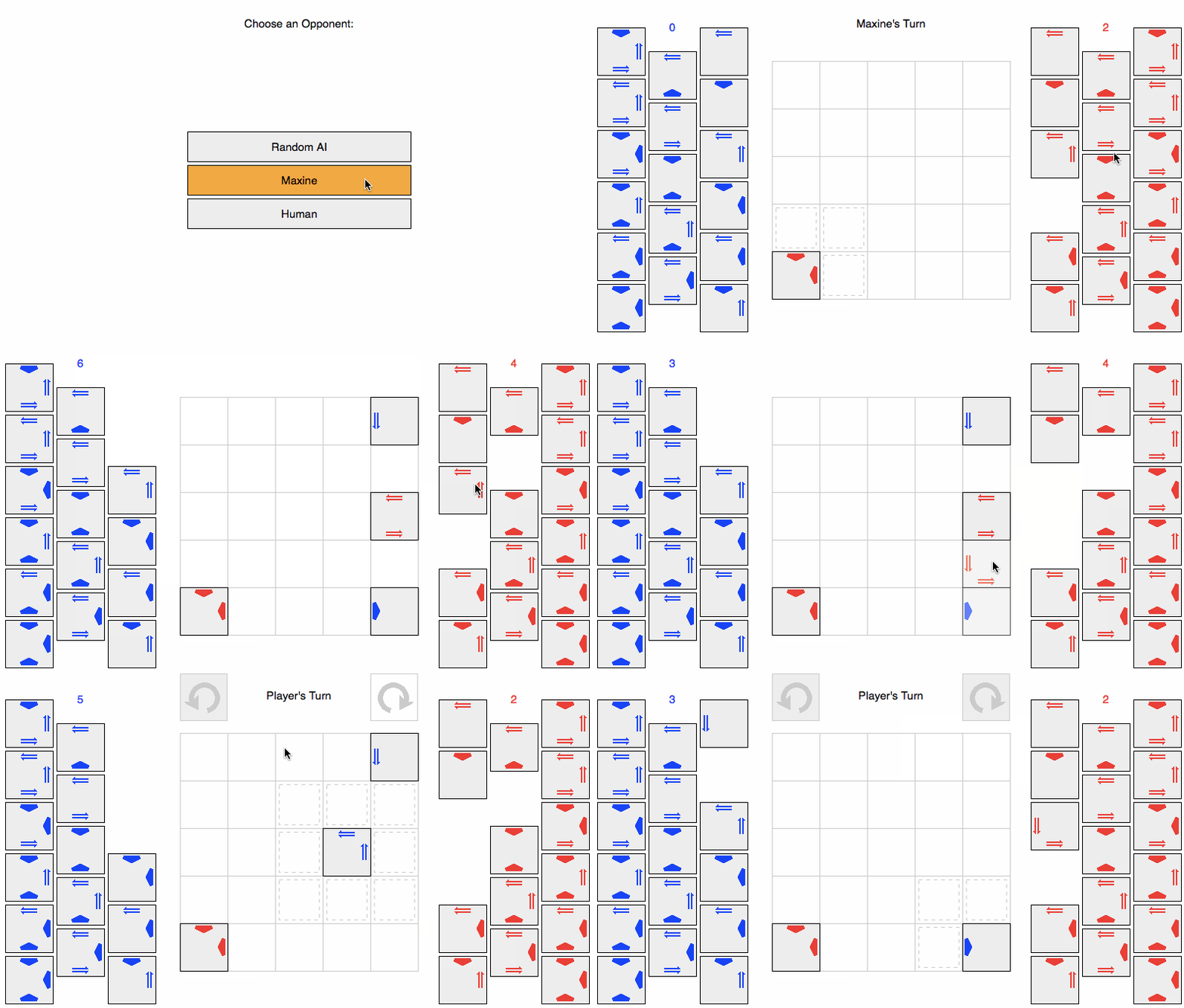
This game is a simplified reimplementation of a shareware title called Zarathustra. This game is a browser-based reimplementation of a 1996 shareware title called Zarathustra by Mark Ressler. From the original website:
Zarathustra is a completely original strategy game for 2-4 players who attempt to dominate the playing field with specially-designed tiles marked with swords and shields. Swords attack other tiles, and shields protect tiles from others' attacks. But watch out -- your shields could protect other players' tiles, and your swords could destroy your own tiles. This isn't Mahjongg, folks. It's war.
I stumbled across the game in an old shareware CD and I was surprised at its depth and elegance, so I decided to try to recreate it for a modern audience. I managed to contact Mark, and he graciously agreed to place the original game and its rules under a Creative Commons license- see below. Some comments from Mark about the creation of Zarathustra:
I do not really consider myself to have been much of a shareware author. This was simply something I wrote to practice Visual Basic, which I later came to abhor, then released it to see what would happen. I do not remember ever actually getting any revenue from it, but I did not really care.
As I recall, I had been playing an early mahjong tile matching game a lot at the time, but I was also thinking about Nietzsche's Zarathustra, particularly about the apparently self-destructive things Nietzsche's character did. I began to think about a tile game where one's moves had the potential for self-destruction. The dualism of sword vs. shield followed naturally, with the requirement that every piece have at least some vulnerability. I forget how I devised the requirement that pieces could not be placed next to the last piece played, but I recall that the skull designation was purely decorative -- just because I wanted to create the bitmap.
Players take turns dragging tiles onto the board. The edges of a tile are shields, spears or blank. Tiles may be rotated by clicking on them. When a player runs out of tiles or empty spaces on the board, the game ends and players earn points for each blank edge of their tiles on the board.
When a tile is played, the edges of tiles which touch are compared. If a spear is adjacent to a blank edge, the tile with the blank edge is removed. If a spear is adjacent to a spear, count up the number of shields facing each tile- The tile surrounded by fewer shields is removed, or both are removed on a tie. If a tile is played and survives this process, tiles may not be played on any of the 8 surrounding spaces on the next player's turn. Remember: spears can attack tiles of the same color, and your shields can be used by the enemy as well.
The original Zarathustra is available under the Creative Commons Attribution-NonCommercial-ShareAlike 3.0 United States License. As a derivative work and under the ShareAlike conditions, this project, Zara, is placed under an identical license.